
Mesh vs. Scrim vs. Blockout Vinyl Banners: When to Use Each
Introduction
Few things sting more than ordering a big, beautiful banner, hanging it on a chain-link fence outside your store, and watching the first stiff breeze fold it in half (or rip it clean off the grommets). Or printing a sharp double-sided sign, only to find the artwork on the back ghosting through and muddying the front. Almost always, the culprit isn't the design or the printer. It's the material.
Vinyl banners aren't one-size-fits-all. The three most common vinyl banner material types, mesh, scrim, and blockout, each solve a specific problem, and using the wrong one is the fastest way to waste money on signage. This guide breaks down what each material is, where it shines, and where it falls flat, so you can order with confidence the first time.
What "Vinyl Banner" Actually Means
Before comparing the three, it helps to understand that "vinyl banner" is a category, not a single product. Most flexible printed banners are made from PVC (polyvinyl chloride) with a printable coating. What changes from one banner to the next is the weave, weight, and internal construction of that vinyl, and those differences are exactly what separate mesh, scrim, and blockout.
Think of it this way: scrim is your everyday workhorse, mesh is built to beat the wind, and blockout exists to make double-sided printing look crisp. Get that framing right and the rest of the decision is easy.
Scrim Vinyl Banners: The Versatile Standard
Scrim is the material most people picture when they hear "scrim vinyl banner." The name comes from the polyester scrim, a grid of woven threads sandwiched between two layers of vinyl. That internal grid is what gives the banner its tear resistance and structure, so it holds up to handling, grommets, and wind tension without splitting.
Scrim banners are most often produced in a 13 oz weight, with heavier 15–18 oz options for premium or long-term jobs. The surface is solid and smooth, which means it takes ink beautifully, you get crisp text, deep saturation, and vivid color. It's the most cost-effective option for the majority of jobs, which is why it dominates retail and event signage.
When to use scrim:
Storefront and window banners
Grand openings, sales, and seasonal promotions
Indoor trade show and event displays
Step-and-repeat backdrops and photo walls
Short- to medium-term outdoor signage on solid backing or walls
Where it struggles: Scrim is a solid sheet, so it catches wind like a sail. Hang a large scrim banner across an open fence or between two poles, and strong gusts can bow the poles, tear the grommets, or rip the material. It's also single-layer, so when you print both sides, light passes through and the two images can bleed into each other.
In our print shop, scrim is the answer for roughly 7 out of 10 banner orders. We had a boutique fitness studio order a 3x8 ft scrim banner for a wall-mounted grand-opening display, and the color popped exactly the way they wanted, because the surface was solid, the brand red stayed true under store lighting instead of looking washed out.
Mesh Vinyl Banners: Built for Wind
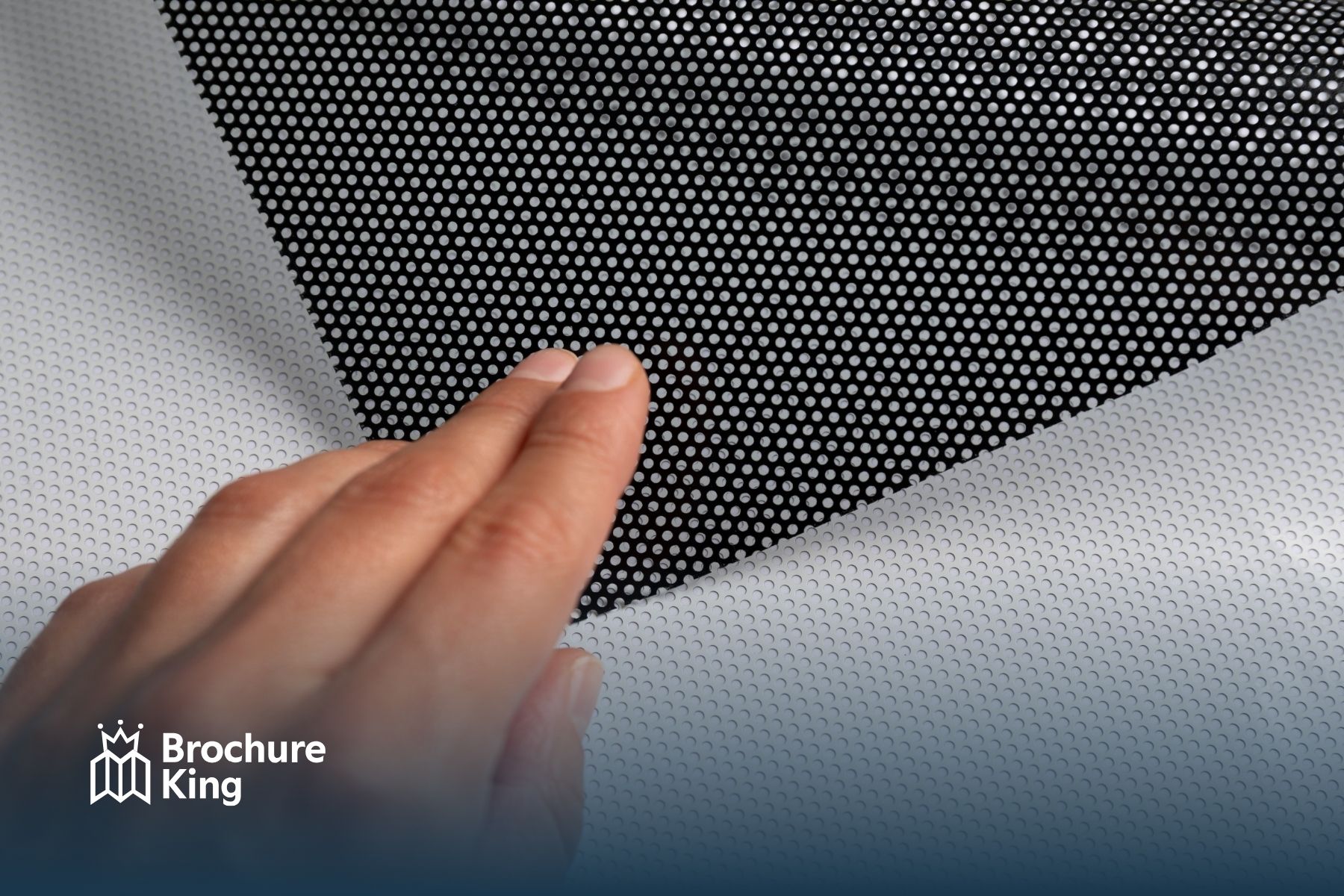
Mesh is scrim's wind-fighting cousin. Instead of a solid surface, mesh vinyl is perforated with thousands of tiny holes that let air pass straight through the material. That single design choice changes everything about where you can hang it.
Because wind moves through a mesh banner instead of pushing against it, mesh dramatically reduces "wind load." That makes it the go-to for large-format outdoor signage in exposed locations where a solid banner would tear itself apart. The tradeoff is that those perforations let a small amount of light and background through, so prints look very slightly less sharp up close, though from any normal viewing distance, modern mesh prints look excellent.
When to use mesh:
Chain-link and construction site fence banners
Building wraps and scaffolding signage
Stadium, arena, and outdoor venue banners
Festival and outdoor event fencing
Any large banner in a windy, open, or elevated location
Where it struggles: Indoors or anywhere wind isn't a factor, mesh gives up image sharpness for a benefit you don't need. For a small indoor sign with fine print, solid scrim is the better call.
We've seen this play out with a commercial contractor who initially ordered solid banners for a multi-story job-site fence. After two of them shredded in spring storms, they switched to mesh, and the replacements rode out an entire windy season without a single tear. The perforated material lets the gusts pass right through.
Blockout Vinyl Banners: the Double-Sided Specialist
Blockout solves one very specific problem: show-through on double-sided banners. A blockout banner has an opaque liner, usually a gray or black layer, bonded into the center of the material. That core blocks light from passing through, so the artwork printed on one side can't bleed into the other.
The result is two clean, independent images on a single banner. Blockout material is typically heavier (often 16–18 oz) and a bit more premium than standard scrim, but for any banner viewed from both sides, it's the difference between a professional finish and a muddy, ghosted mess.
When to use blockout:
Double-sided hanging banners (viewed from both directions)
Sidewalk, boulevard, and pole banners
Parade and processional banners
Banners hung in windows or open spaces with backlighting
Any sign where two different messages appear front and back
Where it struggles: For a standard single-sided banner mounted flat against a wall, blockout is overkill. You'd be paying for an opacity feature you'll never see. Save it for jobs where both sides matter.
We had a downtown cafe hang a banner across a walkway so foot traffic from both directions could read it. Their first attempt on standard vinyl had the reversed backside text faintly visible through the front. Reprinting on blockout fixed it instantly. Each side reads cleanly, with no ghosting under daylight.
Quick Comparison: Mesh Vs. Scrim Vs. Blockout
Feature | Scrim | Mesh | Blockout |
Best for | All-purpose indoor/outdoor | Windy, open, large-format | Double-sided displays |
Surface | Solid | Perforated | Solid with opaque core |
Wind resistance | Low–moderate | High | Low–moderate |
Print sharpness | Excellent | Very good | Excellent |
Double-sided? | Show-through likely | Not ideal | Yes, no bleed-through |
Relative cost | Lowest | Moderate | Higher |
Typical weight | 13–18 oz | 8–12 oz | 16–18 oz |
How to Choose the Right Material in Three Questions
You don't need to memorize specs. Just walk through these in order:
Will it be viewed from both sides? If yes, choose blockout. This trumps almost every other consideration, because show-through ruins a double-sided banner, no matter how good the design is.
Will it hang in an open, windy spot like a fence or building? If yes, choose mesh. The wind resistance protects both your banner and whatever it's attached to.
Neither of the above? Choose scrim. Single-sided indoor or wall-mounted outdoor signage, it gives you the best color, the lowest cost, and plenty of durability.
A few extra factors worth weighing: how long the banner needs to last (heavier weights hold up longer outdoors), whether it'll be rolled and reused (scrim and blockout handle repeated handling well), and your lighting environment (backlit locations make blockout's opacity even more valuable).
Conclusion
The three main vinyl banner material types each earn their place. Scrim is the affordable, vivid all-rounder for storefronts, events, and indoor displays. Mesh is purpose-built to survive wind on fences, buildings, and open outdoor venues. And blockout is the only right answer when your banner will be read from both sides, thanks to the opaque core that kills show-through.
Match the material to the job, viewing angle first, wind exposure second, everything else after, and you'll avoid the most common (and most expensive) banner mistakes. When you're not sure, a quick description of where and how the banner will hang is usually all a good print team needs to point you to the right material.
Order Custom Vinyl Banners with Brochure King
Brochure King prints high-quality marketing materials, custom banners with fast, affordable nationwide shipping across the United States.
Not sure which material fits your project? Request a quote or contact us today!
Frequently Asked Questions
What is the difference between mesh and scrim vinyl banners?
Scrim is a solid-surface vinyl banner that produces the sharpest, most vivid prints and works well indoors or mounted against a wall. Mesh is perforated with tiny holes that let wind pass through, making it the better choice for fences, buildings, and other open, windy outdoor locations where a solid banner could tear. In short: scrim for sharp everyday signage, mesh for wind resistance.
Which vinyl banner material is best for outdoor use?
It depends on the location. For walls or solid backing, standard scrim (13 oz or heavier) holds up well and looks great. For exposed, windy spots like chain-link fences, scaffolding, or open venues, mesh is the safest choice because it reduces wind load and resists tearing. For outdoor signs viewed from both sides, choose blockout to prevent show-through.
Do I need blockout material for a double-sided banner?
Yes, in most cases. Standard single-layer vinyl lets light pass through, so artwork on one side can ghost through to the other and muddy the image. Blockout vinyl has an opaque core that blocks light, keeping both sides crisp and independent. If your banner will be read from both directions, like a hanging or pole banner, blockout is well worth it.
 Hi! How can we help?